
Revolutionising cell and gene therapy with modular, disease-agnostic polyNaut® nanovesicles
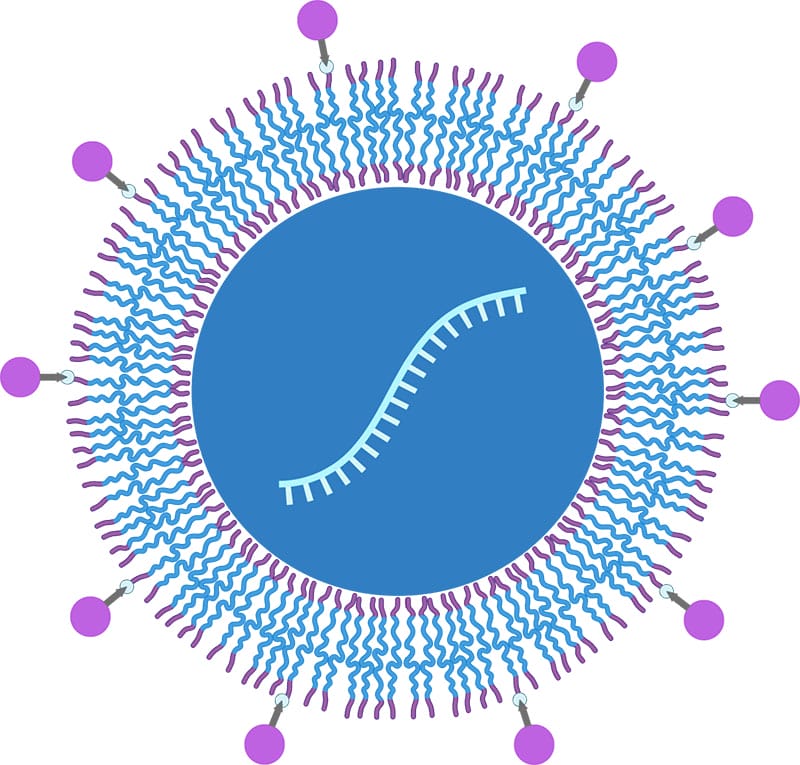
PNV graphic created with BioRender.com.
Simplified single-polymer formulation supporting scalable, competitive manufacturing.
PNVs enable stable ligand conjugation without loss of vesicle integrity, offering a plug-and-play approach to generate cell- or tissue-specific targeting PNVs for different diseases.
PNVs can be engineered to deliver a broad range of cargoes to specific cell types, suitable for a wide range of diseases, from CNS disorders and cystic fibrosis to autoimmune diseases.
ViaNautis’ proprietary polyNaut® platform is engineered to address the major shortcomings seen in other drug delivery technologies.
polyNaut® nanovesicles (PNVs) mark a significant advancement over conventional delivery systems such as lipid nanoparticles and viral vectors:

Focus Areas
Barriers to broader access for in vivo CAR-T therapies include high costs, complex manufacturing and immunogenicity. PNVs can be engineered to precisely target specific immune cells and deliver CAR genetic payloads. With good tolerability, stability at 4°C and simplified manufacturing, PNVs are well-positioned to compete in the in vivo CAR-T market, addressing large patient populations in community settings.
A major challenge in treating CNS disorders is crossing the Blood-Brain Barrier (BBB). BBB-crossing PNVs have the potential to unlock genetic therapies for large populations. With good tolerability and low immunogenicity upon repeat dosing, PNVs can deliver a spectrum of genetic payloads to address a range of CNS diseases.
Roughly one-third of CF patients cannot benefit from existing treatments. Delivering a genetic medicine that restores CFTR function will be a breakthrough for all CF patients, regardless of the type of CFTR mutation they carry. Supported by the Cystic Fibrosis Foundation, we are designing PNVs that can deliver the full-length CFTR gene specifically to airway epithelial cells, where CFTR expression matters the most.